
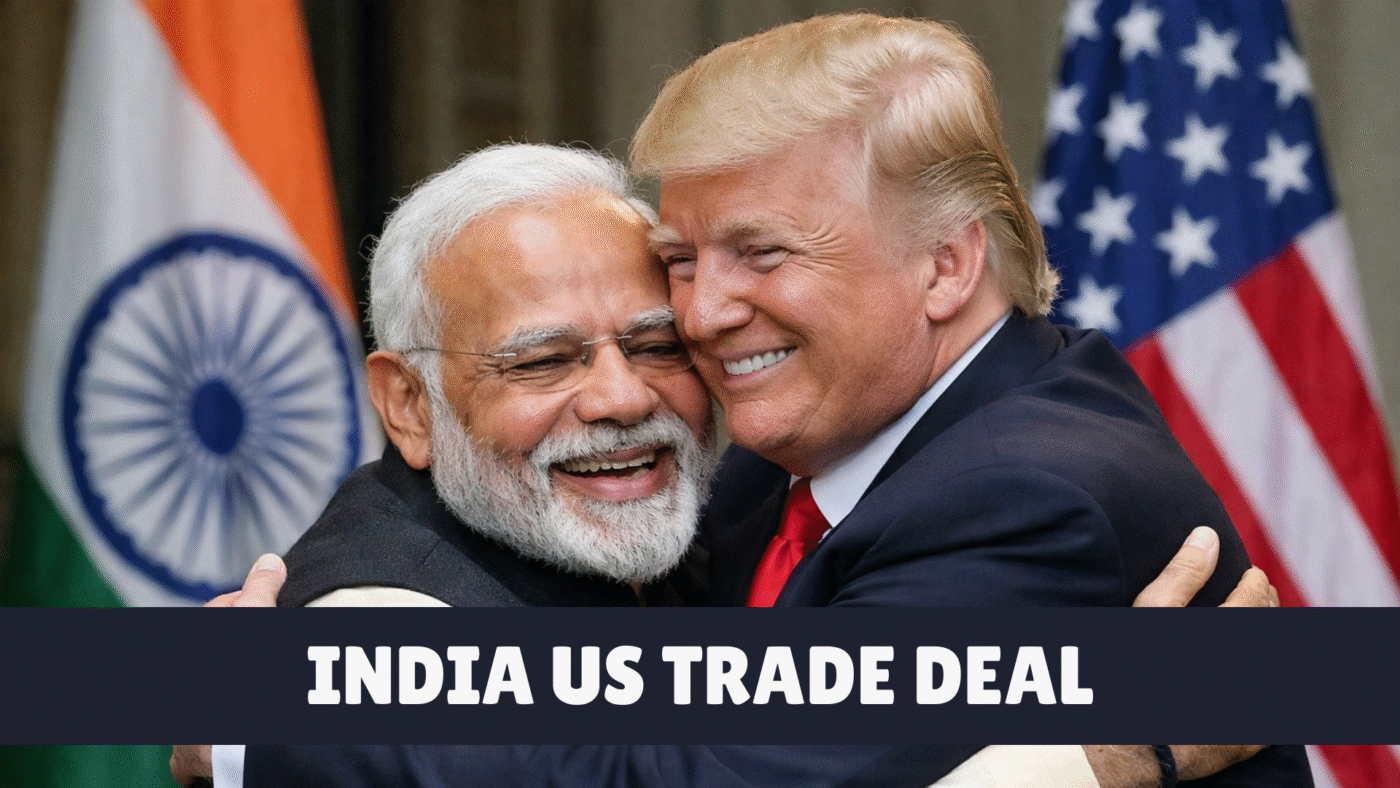
The India US Trade Deal announced in February 2026 marks one of the largest bilateral economic partnerships in modern history. The interim agreement strengthens trade ties between two global economic giants while reshaping energy imports, technology cooperation, and tariff structures.
Under this agreement, India has committed to purchasing $500 billion worth of U.S. goods over five years. In return, the United States has significantly reduced tariffs on Indian exports and removed earlier penalty duties.
This agreement is widely seen as a stepping stone toward a comprehensive Bilateral Trade Agreement (BTA) expected to reshape global trade dynamics.
Overview of the India US Trade Deal
The India US Trade Deal is designed to resolve ongoing trade disputes, improve economic cooperation, and create long-term strategic alignment between the two countries.
Key Objectives of the Deal
-
Strengthening economic cooperation
-
Reducing tariff barriers
-
Expanding energy and technology collaboration
-
Diversifying India’s energy imports
-
Boosting exports from both countries
This deal reflects a shift toward stronger Western trade partnerships while reducing India’s reliance on traditional suppliers like Russia.
Key Provisions of the 2026 India US Trade Deal
1. Tariff Rollback
One of the biggest outcomes of the India US Trade Deal is the removal of the 25% penalty duty imposed by the U.S. in 2025. This penalty was originally introduced due to India’s continued purchase of Russian oil.
What This Means
-
Indian exporters regain competitive pricing
-
Increased export volume to the U.S.
-
Improved business confidence between both nations
Real-World Example
Indian textile manufacturers previously struggled to compete with Vietnam and Bangladesh due to higher U.S. tariffs. After tariff reductions, Indian exporters can now offer better pricing, potentially increasing market share in the U.S.
2. Reciprocal Tariff Reductions
The U.S. has reduced tariffs on Indian exports from nearly 50% to 18%, providing major relief across several industries.
Benefits of Tariff Reduction
-
Lower costs for Indian exporters
-
Higher profit margins
-
Increased global competitiveness
-
Greater foreign investment opportunities
3. India’s $500 Billion Import Commitment
India will import a wide range of goods from the U.S. under this agreement. The commitment is spread across multiple strategic sectors.
Import Categories
| Sector | Products Included | Strategic Importance |
|---|---|---|
| Energy | Crude oil, LNG, shale gas, coal | Energy security and supply diversification |
| Technology | GPUs, AI hardware, data center equipment | AI development and digital infrastructure |
| Aviation | Aircraft and components | Aviation modernization |
| Agriculture | Fruits, nuts, soybean oil, premium spirits | Trade balance and consumer market expansion |
| Precious Metals | Gold and industrial metals | Industrial and financial reserves |
Russian Oil Dependency Shift
A crucial condition of the India US Trade Deal is India’s commitment to stop direct or indirect imports of Russian oil.
Why This Matters
-
Aligns India with Western trade policies
-
Strengthens geopolitical partnerships
-
Diversifies energy supply chains
Real-World Example
India previously relied heavily on discounted Russian crude oil. After this deal, Indian refineries may increasingly purchase U.S. LNG and Venezuelan crude, reducing supply concentration risks.
Sector-Wise Impact on Indian Industry
Pharmaceutical Industry
The Indian pharmaceutical sector is one of the biggest beneficiaries of the India US Trade Deal.
Key Advantages
-
Relief from Section 232 investigations
-
Potential zero tariffs on generic medicines
-
Increased export opportunities
Real-World Example
Indian companies like Sun Pharma and Dr. Reddy’s can expand generic drug exports to the U.S., making affordable medicines more accessible while boosting revenue.
Textiles and Apparel
The textile sector experienced immediate relief as tariffs dropped significantly.
Industry Impact
-
Improved global competitiveness
-
Increased demand from U.S. retailers
-
Job growth in manufacturing hubs
Real-World Example
Textile clusters in Tiruppur and Surat could see higher export orders from U.S. clothing brands seeking cost-effective sourcing.
Agriculture Sector
India will reduce duties on selected U.S. agricultural imports, increasing product availability in Indian markets.
Key Changes
-
Lower prices for imported nuts and fruits
-
Increased premium product availability
-
Balanced trade relationship
Potential Impact
Indian consumers may experience improved access to high-quality imported agricultural products, especially in urban markets.
Technology and AI Infrastructure
Technology collaboration is a major highlight of the India US Trade Deal.
Expected Benefits
-
Increased access to high-performance GPUs
-
Expansion of data centers
-
Growth in AI startups and research facilities
Real-World Example
Indian AI companies and data centers may now purchase advanced GPU hardware from U.S. firms like NVIDIA, accelerating AI development and cloud computing capabilities.
Market Reaction to the India US Trade Deal
The financial markets responded positively to the trade announcement, reflecting investor confidence.
Stock Market Performance
| Company | Market Reaction |
|---|---|
| Wipro | +6.8% |
| HDFC Bank | +4.4% |
| Infosys | +4.3% |
| iShares MSCI India ETF | +3% |
Interpretation
The positive market response indicates investor optimism about long-term trade stability and economic growth potential.
Strategic Importance for Global Trade
The India US Trade Deal has implications beyond bilateral trade.
Global Impacts
-
Strengthens India’s role in Western supply chains
-
Reduces global reliance on Russian energy exports
-
Encourages technology collaboration between democracies
-
Influences future global trade alliances
Future Outlook: Toward a Full Bilateral Trade Agreement
The current deal is considered an interim step toward a comprehensive Bilateral Trade Agreement expected by mid-2026.
Possible Future Developments
-
Expansion of digital trade agreements
-
Intellectual property protection improvements
-
Additional tariff reductions
-
Increased defense and technology cooperation
Challenges and Concerns
Despite its advantages, the India US Trade Deal also presents potential challenges.
Possible Risks
-
Increased dependence on U.S. imports
-
Domestic industry competition from foreign goods
-
Energy price fluctuations
-
Trade balance adjustments
Conclusion
The India US Trade Deal represents a historic economic partnership that could reshape trade relations, industrial growth, and global supply chains. With tariff reductions, technology cooperation, and energy diversification, the agreement offers significant opportunities for both countries.
While challenges remain, this deal is expected to strengthen economic stability, encourage innovation, and establish India as a stronger global trade partner.
Frequently Asked Questions (FAQs)
What is the India US Trade Deal 2026?
The India US Trade Deal is a bilateral agreement where India commits to purchasing $500 billion worth of U.S. goods in exchange for tariff reductions and trade cooperation.
Why did the U.S. remove penalty tariffs on India?
The tariffs were removed after India agreed to reduce Russian oil imports and increase trade cooperation with the United States.
Which industries benefit the most from the trade deal?
Pharmaceuticals, textiles, agriculture, technology, and aviation sectors are expected to gain the most.
How does the deal impact Indian consumers?
Consumers may see better product availability, improved technology infrastructure, and potentially lower costs in certain imported goods.
Is this the final trade agreement between India and the U.S.?
No, this is an interim agreement. A full Bilateral Trade Agreement is expected in the future.
Read More:
