
The SEO landscape in 2025 is no longer defined by simple keyword ranking. Google’s transformation into a semantic, AI-driven engine has forced marketers, bloggers, agencies, and brands to shift from “keyword-first writing” to “topic-first strategy.” At the center of this transformation is the concept of SEO keyword clusters — a systematic, data-driven approach for grouping related queries and building powerful topical authority.
In today’s environment, ranking a single page for hundreds of keywords is not luck — it’s architecture. And that architecture begins with clustering.
This comprehensive guide goes far beyond basic definitions. It is designed for a mixed audience — beginners who want clarity, intermediates who want structured workflows, and experts who want technical depth and exact tools.
You’ll learn:
-
How SEO keyword clusters work in Google’s systems
-
Why clustering is now essential for ranking
-
The scientific algorithms behind clustering tools
-
Advanced tools and how to use them
-
Step-by-step workflows for building scalable clusters
-
Practical examples and strategic models
-
Mistakes to avoid
-
Comparison tables and deep tool analysis
By the end of this guide, you’ll be able to build enterprise-level keyword clusters that not only rank but dominate your entire niche.
What Are SEO Keyword Clusters & Why They Matter in 2025?
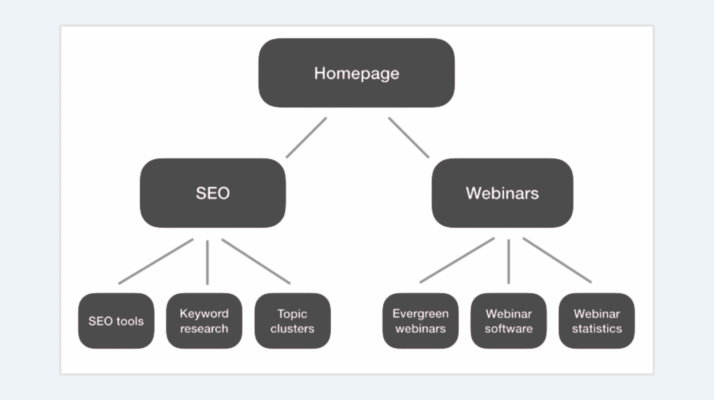
At a surface level, SEO keyword clusters are groups of related keywords you target within one strategically crafted page or content hub. But at a technical SEO perspective, keyword clusters represent the semantic overlap between user intent, NLP vectors, entity relationships, and SERP similarity models.
The Technical Definition
SEO keyword clusters are collections of search queries that share:
-
A common user intent
-
High SERP overlap
-
Semantic relevance
-
Co-occurrence within top-ranking content
-
Inclusion in the same entity graph
-
Behavioral alignment (CTR similarity, search patterns, device behaviors)
This means Google sees these keywords as contextually related and suitable to be answered together.
How Google Understands Clusters
Google’s understanding relies on:
-
Neural matching (understanding meaning)
-
Contextual embeddings (vector similarity)
-
Entity recognition systems
-
BERT + MUM — semantic interpretation models
-
RankBrain — query rewriting & intent grouping
-
Knowledge Graph — entity relations
So when you build content using keyword clusters, you’re aligning your content architecture with Google’s internal knowledge models.
This is why cluster-based content ranks faster, ranks for more terms, and gains topical authority with fewer backlinks.
How SEO Keyword Clusters Improve Topical Authority
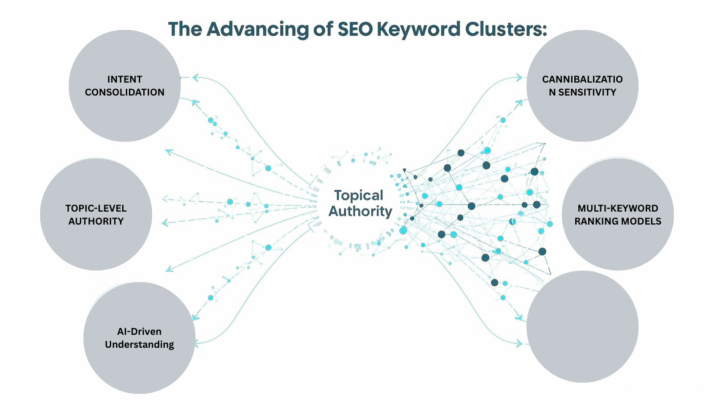
There are five major transformations in Google that make clusters mandatory:
1. Intent Consolidation
Google groups similar queries under one SERP → fewer pages can satisfy more searches.
2. Topic-Level Authority
Instead of ranking pages independently, Google ranks websites based on topical expertise.
3. AI-Driven Understanding
Google’s use of LLMs means it understands synonyms, context, and deep semantic relationships.
4. Cannibalization Sensitivity
Google now penalizes sites with multiple pages competing for the same intent.
5. Multi-Keyword Ranking Models
Modern content ranks for a cluster of keywords — not one phrase.
A well-structured cluster can help you rank for:
-
Long-tail variations
-
Entity synonyms
-
Contextual angles
-
Related micro-topics
-
Question-based terms
-
Sub-intents
This turns your content into a keyword magnet.
Pillar-Cluster Architecture (The Backbone of Topical SEO)
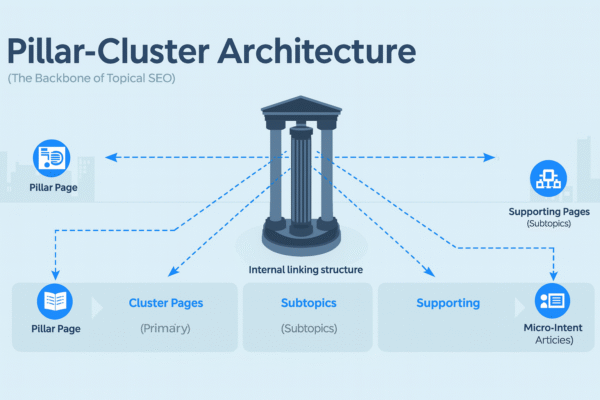
The core of clustering lies in how you organize your content.
1. Pillar Pages (Primary Topic)
These pages target the broadest intent and act as the “authority anchor.”
Length: 3000–5000 words
Goal: Cover every sub-topic at a high level.
2. Cluster Pages (Subtopics)
Each page focuses on a single sub-intent or deep dive.
Length: 1500–2500 words
3. Supporting Pages (Micro-Intent Articles)
These add depth and create internal link strength.
4. Internal Linking Structure
The internal architecture must follow:
-
Vertical linking (pillar → cluster → support)
-
Reverse linking (support → cluster → pillar)
-
Horizontal linking (clusters interlink)
This creates a content ecosystem Google can easily crawl, understand, and trust.
How Keyword Clustering Tools Actually Work (Deep Technical Breakdown)
To understand clustering tools, you must understand their underlying algorithms.
1. SERP Similarity Analysis (Core Method)
Tools check the top 10–30 ranking pages of each keyword and measure overlap.
If keyword A and keyword B share at least 3–5 URLs, they belong in the same cluster.
2. NLP Vector Similarity (AI-Based Semantic Grouping)
Tools like Surfer, WriterZen, and KI use NLP to convert keywords into vectors and measure semantic distance.
3. Intent Classification Systems
Tools classify keywords into intent layers:
-
Informational
-
Transactional
-
Commercial
-
Navigational
-
Mixed Intent
4. Entity Graph Mapping
WriterZen and Semrush use Knowledge Graph signals to detect entity relationships.
5. Co-Occurrence Networks
Tools analyze what terms appear together in top-ranking articles.
If terms co-occur frequently → cluster them.
6. Machine Learning Clustering Models
Some tools use ML techniques like:
-
K-means clustering
-
Hierarchical clustering
-
Spectral clustering
-
Affinity propagation
These group keywords based on multi-dimensional semantic and SERP data.
Top 5 SEO Keyword Clustering Tools — Deep Technical, Practical, and Real-World Breakdown
Now the core section — the most detailed, tool-by-tool analysis written in a premium SEO specialist tone.
Each tool will be explained in depth, not generic bullet points.
Tool 1: Surfer SEO — SERP Similarity + NLP-Based Clustering
Surfer SEO is one of the most advanced content optimization and clustering platforms due to its hybrid engine combining SERP similarity mapping with AI vector clustering.
How Surfer Clusters Keywords (Technical Workflow)
-
Takes your keyword list
-
Fetches top 10–20 ranking pages for each keyword
-
Calculates URL overlap percentage
-
Measures semantic similarity using NLP embeddings
-
Groups keywords into clusters with “clustering confidence scores”
-
Assigns cluster to writer through Content Editor
-
Generates real-time content guidelines based on top SERPs
Advanced Advantages
-
Uses topic modeling based on real SERPs
-
Updates its database weekly
-
Detects micro-intent splits
-
Helps avoid cannibalization by flagging overlap conflicts
-
Produces cluster-specific content outlines
Ideal For
Agencies, intermediate users, and anyone wanting high-precision SERP overlap clustering.
Tool 2: Semrush Keyword Manager — Entity-First, Intent-Driven Clustering
Semrush takes a knowledge-graph-based approach.
It categorizes keywords based on:
-
Entity relationships
-
Keyword intent
-
Phrase-match clusters
-
Search behavior correlations
What Makes Semrush Unique
Semrush doesn’t rely solely on SERPs — it uses Google’s Knowledge Graph and internal semantic databases to understand relationships that aren’t always clear from search results.
Example:
“SEO tools for agencies”
and
“enterprise SEO software”
have different wording, similar SERPs, and overlapping entity relationships.
Semrush detects this nuance better than other tools.
Deep Technical Capabilities
-
Intent classification using machine learning
-
SERP feature extraction
-
Keyword grouping by parent topic
-
Keyword gap mapping against competitors
Ideal For
Enterprises, large websites, and multi-topic content strategies.
Tool 3: Keyword Insights — Deep SERP Overlap + NLP Intent
Keyword Insights is one of the most accurate SERP-based clustering tools available. The reason is its higher threshold for SERP similarity and superior intent detection engine.
How Keyword Insights Works
-
Scrapes 20–30 SERP results
-
Measures overlap and cluster purity
-
Uses NLP to classify search intent
-
Generates content briefs for each cluster
-
Highlights keywords that need separate pages
Why It’s So Accurate
Its cluster purity score helps you avoid mixing keywords that look similar but actually have different ranking patterns.
Example:
“SEO tools free trial”
“free SEO tools”
— same words, different intent → Keyword Insights separates them.
Ideal For
Bloggers, agencies, and SEOs who rely heavily on SERP precision.
Tool 4: WriterZen — Topic Discovery + Knowledge Graph Clustering
WriterZen focuses on topic-level clustering instead of keyword-level grouping.
This creates deeper, more authoritative content clusters.
How WriterZen Clusters
-
Scans Google Knowledge Graph
-
Maps main entities → sub entities
-
Builds topic groups
-
Extracts keywords under each topic
-
Forms semantic keyword clusters
-
Suggests missing subtopics to improve topical depth
What Makes WriterZen Special
It uses entity-level semantic understanding to expose gaps in your content strategy.
It shows you not only keywords — but topics Google wants you to cover.
Ideal For
Beginners, content strategists, and anyone building topical authority.
Tool 5: Ahrefs (Manual Clustering) — Best for Technical SEOs
Ahrefs does not offer automatic keyword clustering.
But its raw keyword and SERP data is so accurate that skilled SEOs can build superior manual clusters, especially for high-stakes topics.
Manual Workflow Using Ahrefs
-
Extract keywords using Keyword Explorer
-
Group them under Parent Topics
-
Compare SERPs manually
-
Examine top pages for overlap
-
Use Content Gap to discover missing clusters
-
Validate with Keyword Difficulty + Intent
Why Manual Clustering Can Be Better
AI tools misunderstood mixed-intent keywords.
A technical SEO can detect subtle nuances that tools often miss.
Ideal For
Professional SEOs handling high-authority sites.
Advanced Keyword Clustering Framework for 2025 (Full Workflow)
Here is the exact workflow agencies and enterprise SEOs use:
Phase 1: Data Gathering
-
Semrush → Volume + Intent
-
Ahrefs → Keyword reliability
-
Surfer → SERP analysis
-
Google Suggest → Variations
-
PAA + Related Searches → Micro-intents
Phase 2: Data Cleaning
Remove:
-
Brand terms
-
Location-specific terms (unless used)
-
Irrelevant keywords
-
Duplicates
Phase 3: Clustering
Using Keyword Insights or Surfer:
-
Identify main cluster
-
Create subclusters
-
Extract supporting keywords
-
Separate conflicting intents
Phase 4: SERP Validation
Open real SERPs and check:
-
Intent consistency
-
Overlapping ranking URLs
-
Competitor angle
Phase 5: Content Mapping
Map clusters to:
-
Pillar pages
-
Cluster pages
-
Supporting content
Phase 6: Content Outline Creation
Each cluster receives an outline:
-
H2s for sub-intents
-
H3s for micro-intents
-
FAQ from PAA
Phase 7: Internal Linking Plan
Use:
-
Vertical linking
-
Horizontal linking
-
Authority flow framework
-
Semantic linking
Section 7: Keyword Cluster Types (Deep Classification)
Type A: SERP-Driven Clusters
Pure SERP similarity-based grouping.
Type B: Semantic Clusters
Based on NLP and meaning.
Type C: Intent Clusters
Grouped strictly by user intent.
Type D: Entity-Based Clusters
Grouped based on Knowledge Graph relationships.
Type E: Mixed Hybrid Clusters
The most powerful cluster type — combining SERP + semantic + entity + intent signals.
Mistakes Most SEOs Make While Clustering
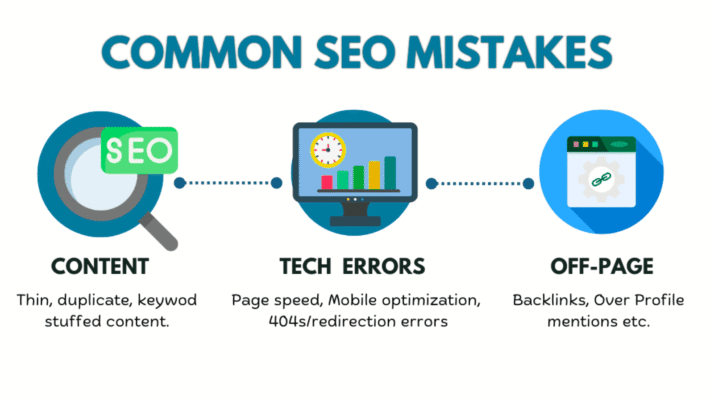
❌ Mistake 1: Grouping keywords by similar wording
Example:
“seo tools free”
“free tools for seo”
— Same words, different intent.
❌ Mistake 2: Not checking SERP overlap
If SERPs differ → write separate pages.
❌ Mistake 3: Mixing intents
Never mix informational + transactional.
❌ Mistake 4: Over-clustering
One page cannot answer 60–80 queries.
❌ Mistake 5: Under-clustering
Too many pages → cannibalization.
Feature Comparison Table (Advanced Matrix)
| Feature | Surfer | Semrush | Keyword Insights | WriterZen | Ahrefs |
|---|---|---|---|---|---|
| SERP Overlap Depth | High | Medium | Very High | Medium | Manual |
| NLP Semantic Mapping | Yes | Partial | Yes | Yes | No |
| Topic Discovery | Moderate | Very Strong | Moderate | Very Strong | Medium |
| Intent Detection | Strong | Strongest | Very Strong | Medium | Manual |
| Best For | Agencies | Enterprises | Bloggers + SEOs | Beginners + Strategists | Technical SEOs |
Which Tool Should YOU Use?
If you are a beginner → WriterZen
Easy interface, strong topic discovery.
If you are intermediate → Surfer SEO
Best balance of SERP and NLP clustering.
If you want maximum precision → Keyword Insights
Best cluster purity in the industry.
If you run an agency → Semrush + Surfer combo
Enterprise-level power.
If you are a technical SEO → Ahrefs
Manual clustering = unmatched accuracy.
Conclusion – The Future of SEO Belongs to Keyword Clusters
In 2025 and beyond, SEO is no longer about optimizing for individual keywords.
It’s about building semantic networks, covering entire topics, and proving to Google that your website deserves to rank as an authoritative source.
The foundation of this entire approach is the use of SEO keyword clusters.
When you use clusters:
-
You rank faster
-
You rank for many keywords
-
You avoid cannibalization
-
You build topical authority
-
You dominate your niche
Whether you’re a blogger, an SEO expert, an agency owner, or a business — master keyword clustering and you master modern SEO.
Rea More Blog: SEO Keyword Clusters: Advanced Guide to Top Clustering Tools
